Pipeline Pigging Solutions for Biofilm Removal
What is Pigging?
Pigging is a cleaning process used in pipelines to remove unwanted materials such as debris, scale, product residue, or microbial biofilms. Originally developed for the oil and gas industry, pigging is now widely used across sectors including water utilities, food and beverage, pharmaceuticals, and chemicals — anywhere that fluid pipes require cleaning or maintenance
At its core, pigging involves inserting a "pig" — a device usually made of foam, rubber, or ice — into the pipeline. The pig is pushed through the pipe using system pressure or another propellant, scraping the inner surface and dislodging build-up along the way.
Why Remove Biofilms from Pipelines?
Biofilms are colonies of microorganisms that adhere to surfaces in moist environments. In pipelines, they form slimy layers that can:
- Reduce flow efficiency
- Accelerate corrosion
- Compromise product purity
- Increase microbial contamination risks (e.g., E. coli, Pseudomonas, Legionella)
Complicate water quality compliance in municipal and industrial systems If left untreated, biofilms are extremely resilient and can lead to costly shutdowns or health risks. Regular pigging, especially when integrated with disinfection protocols, helps mitigate these issues.
Types of Pigging for Biofilm Removal
-
Conventional Pigging
In conventional pigging, solid pigs (usually made of polyurethane or foam) are propelled through the pipe. These pigs are designed with various features such as:
- Brushes or scraping elements to remove hardened deposits
- Bypass ports to allow cleaning chemicals to flow ahead of the pig
- Tracking systems to monitor movement in long pipelines
Conventional pigging is effective for removing thicker deposits and hard scaling, but may not be suitable for complex pipe networks or sensitive systems like food-grade or potable water lines.
-
Ice Pigging: A Smart Solution for Biofilm Management
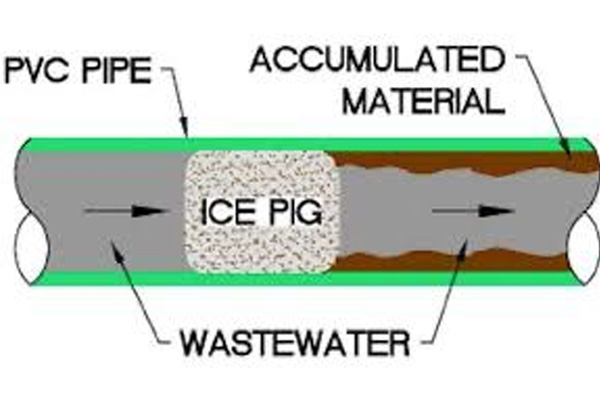
Ice pigging is a modern, non-abrasive pigging method that uses a thick slurry of ice as the cleaning medium. This semi-solid ice behaves like a solid pig but can navigate tight bends, valves, and diameter changes — making it ideal for more intricate or delicate pipeline systems.
Advantages of Ice Pigging for Biofilm Removal:
- Highly Effective: Ice forms a tight seal against pipe walls, scraping and dislodging biofilms as it passes through.
- Minimal Downtime: Ice pigging is fast and requires minimal pipe disassembly.
- Safe and Non-Abrasive: Suitable for pipes that can't tolerate harsh mechanical pigs.
- Environmentally Friendly: Uses only water and refrigerant for ice production — no harsh chemicals needed.
- Excellent Flow Recovery: Studies show significant improvement in flow capacity and water quality post-treatment.
Applications of Ice Pigging
- Municipal water mains
- Food and beverage processing lines
- Pharmaceutical clean-in-place (CIP) systems
- Fire suppression systems
- Cooling/heating loops with organic contamination
How the Ice Pigging Process Works
- Preparation: Ice slurry is prepared on-site or delivered in specialized tanks.
- Insertion: The ice is pumped into the pipe section requiring cleaning.
- Pushing Medium: Water or air pressure is applied to push the ice pig through the pipe.
- Cleaning: As the ice travels, it conforms to the internal pipe shape, scraping off biofilms and transporting debris.
- Discharge: The ice pig and loosened materials are expelled at an outlet point and captured for disposal or analysis.
- Discharge: The ice pig and loosened materials are expelled at an outlet point and captured for disposal or analysis.
Partner with Us for Pipeline Hygiene
we offer comprehensive pigging solutions — including conventional and ice pigging — to keep your pipelines clean, efficient, and biofilm-free.
Our Services Include:
- Pipeline inspection and assessment
- Custom pigging system design
- On-site ice pigging operations
- Water quality and biofilm testing
- Preventive maintenance plans